


Quick Answer
How long does it take for a wisdom tooth socket to close?
The gum usually closes over the socket within a few weeks, and the bone underneath fills in over several months. Protect the blood clot, eat soft foods, and rinse gently. Call a dentist if pain or swelling gets worse instead of better.
Key Takeaways
- A hole in the gum after wisdom tooth removal is a normal healing socket.
- A blood clot forms first and protects the bone while new tissue grows.
- Gums usually close in a few weeks; the bone can take several months.
- Eat soft foods, rinse gently after 24 hours, and avoid straws and smoking.
- Call a dentist for worsening pain, swelling, pus or a bad smell.
- Trouble breathing or swallowing, or heavy bleeding, means the ER or 911.
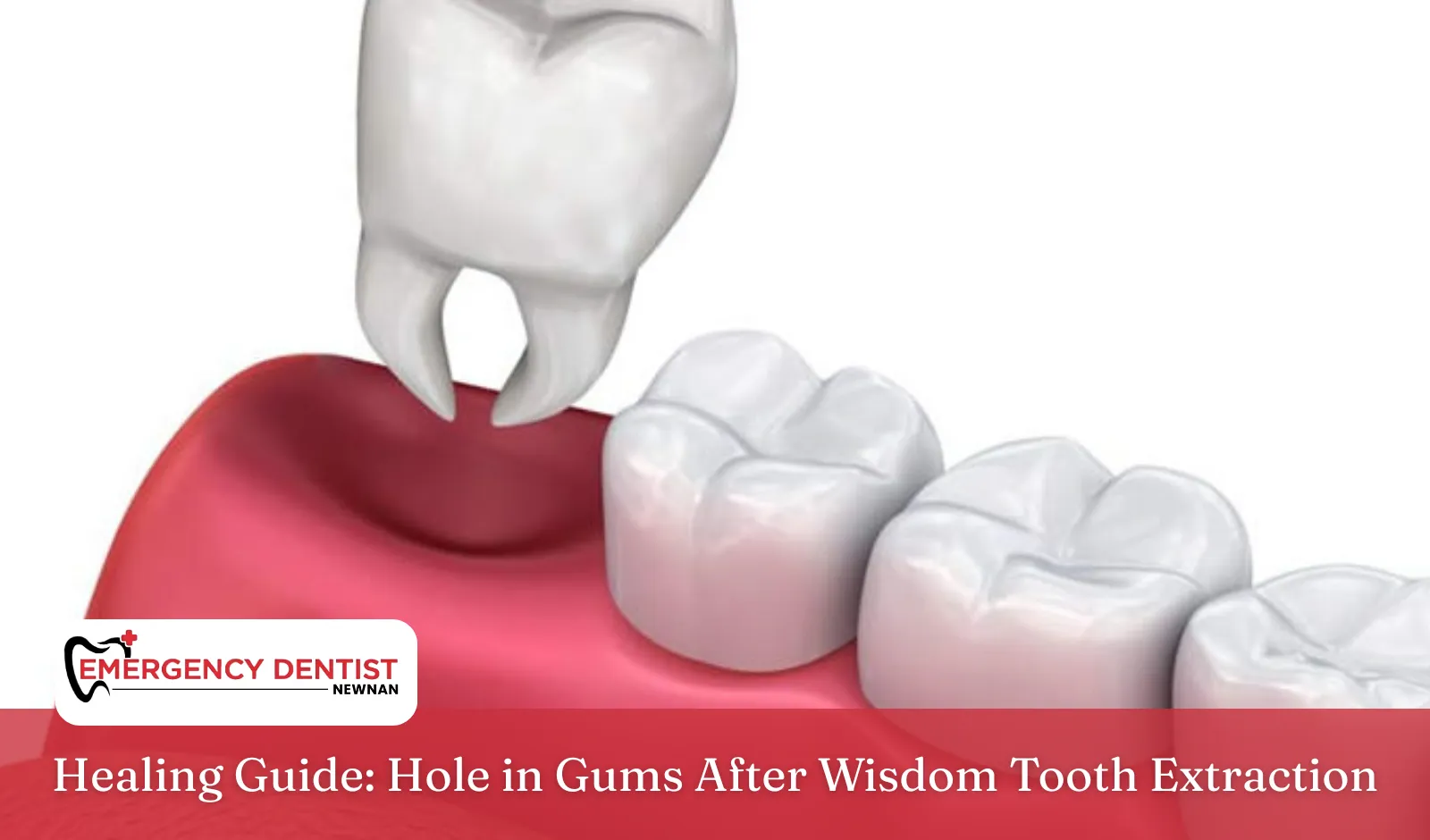
Many patients are surprised to notice a hole in their gums after wisdom tooth extraction. These openings, also called sockets or a tooth hole, are part of the body’s natural healing process. They can look worrying, but they are normal. Knowing why they form, how long they take to close, and how to care for them can help your recovery go smoothly.
Why Holes Develop After Wisdom Tooth Extraction

When a tooth is removed, it leaves an extraction site in the jawbone. If the tooth was impacted (stuck under the gum or bone), the space may look deeper. The gum tissue doesn’t seal instantly. Instead, the body repairs in stages, first with a protective clot, then with new tissue, and later with bone.
The Healing Process
In the first hours after surgery, a blood clot forms in the extraction site. This clot shields exposed bone and nerves while creating a foundation for new gum tissue to grow.
During the first week, the gums start closing in from the sides. After two to three weeks, most sockets are much smaller, though deep ones can take longer to close. The bone underneath usually takes several months to fill in fully. The most important step is protecting the blood clot, since losing it too early can slow healing and lead to dry socket.
Related: Wisdom Tooth Extraction: Recovery Stages and Aftercare Tips
Risks During Recovery
Most patients heal without difficulty, but complications can occur. Food particles may become lodged in the sockets, causing irritation. More serious problems include dry socket and infection. Dry socket occurs if the clot is lost too soon, leaving bone exposed. Signs include severe pain that starts a few days after surgery, a bad smell or taste, or a socket that looks empty.
Infections can also develop if bacteria enter the extraction site, which is why good oral hygiene matters throughout healing.
Related: Signs of Dry Socket After Tooth Extraction and Its Causes
Eating After Wisdom Tooth Extraction

Your diet is vital in protecting the extraction site. We recommend sticking to soft foods for the first few days after surgery. Good options include yogurt, mashed potatoes, smoothies eaten with a spoon, and lukewarm blended soups.
Avoid crunchy, sticky, or spicy foods that may get lodged in the sockets or irritate the area. As the gums recover, you can gradually reintroduce solid foods, but chew on the opposite side until cleared by your dentist.
Related: What to Eat After Wisdom Tooth Extraction for Gentle Healing
Safe Cleaning Practices
Keeping the tooth hole clean is essential, but it must be done carefully. Brushing directly on the extraction site can disrupt healing. Instead, follow these steps:
- After 24 hours, gently rinse with warm water or a mild salt water solution.
- Avoid vigorous swishing, as this can loosen the clot.
- Continue to brush your teeth and floss the rest of your mouth to maintain good oral hygiene.
These steps reduce the chance of dry socket or infection and help prevent debris from collecting in the socket.
Managing Pain and Swelling
It’s normal to feel some discomfort and swelling after wisdom tooth extraction. Using an ice pack wrapped in a cloth on your cheek, on and off for the first 24 hours, can help reduce swelling. Over-the-counter pain relievers may help if used as directed on the label and if they are safe for you, or follow your dentist’s instructions.
Related: How to Relieve Pain When Gums Hurt After Tooth Extraction
When to See a Dentist
Most patients recover without major issues, but sometimes urgent care is necessary. Call an Emergency Dentist in Newnan if you notice:
- Severe pain that gets worse instead of better
- Signs of dry socket or infection, such as swelling, pus, or foul odor
- Bleeding that keeps going after 30 minutes of firm pressure on gauze
- Difficulty opening your mouth
Go to the ER or call 911 if you have trouble breathing or swallowing, swelling that spreads to your face or neck with a fever, or heavy bleeding that will not stop with firm pressure.
Getting seen quickly helps keep your healing on track.
Tips for a Smooth Recovery

Everyone heals at a different pace, but these reminders will support a smooth recovery:
- Rest and avoid strenuous activities for the first 48 hours.
- Protect the extraction site by not smoking, avoiding straws, and resisting the urge to poke the area.
With these habits, the socket usually closes over time as new gum tissue grows in.
Related: Smoking After Tooth Extraction: Healing Risks & Care Guide
Final Thoughts
Noticing a hole in gums after wisdom tooth extraction is a normal part of healing. Over time, the extraction site will fill with new gum tissue and bone. Following your dentist’s aftercare and keeping your mouth clean can lower the risk of dry socket and infection.
Recovery takes patience, but most sockets close with proper care. If you notice unusual symptoms, contact an Emergency Dentist in Newnan for prompt treatment.
Worried About Your Wisdom Tooth Socket in Newnan?
A hole that hurts more, smells bad or looks empty a few days after surgery can leave you with questions. An Emergency Dentist in Newnan can examine the socket, check for dry socket or infection, and give guidance based on your symptoms. Contact the dental team to arrange a visit.
Frequently Asked Questions
Is it normal to have a hole in my gum after wisdom tooth removal?
Yes. The hole is the healing socket, and it slowly fills with new gum tissue and bone.
Can I use a straw or smoke while the socket heals?
It is best to avoid both until your dentist says it is safe. Suction and smoking can loosen the blood clot and raise the risk of dry socket.
What should I do if food gets stuck in the socket?
After the first 24 hours, rinse gently with warm salt water and do not poke the area. If food stays stuck or pain increases, call your dentist.