
After Wisdom Tooth Extraction: Healing and Care Steps
Quick Answer
What should you do after wisdom tooth extraction?
After wisdom tooth extraction, protect the extraction site, manage pain and swelling, prevent excess bleeding, and closely follow all after care instructions for wisdom tooth removal provided by your dental team. The first 48 hours are the most important for proper healing.
Key Takeaways
- The first 48 hours strongly affect healing.
- A blood clot inside the tooth socket protects bone and nerves.
- Mild bleeding, oozing or redness is common early on.
- Warm salt water rinses begin after 24 hours.
- Avoid disturbing the surgical areas.
- Take medication exactly as directed if your provider needs to prescribe pain medication.
- Call an Emergency Dentist in Newnan if you notice excess bleeding or unusual symptoms.
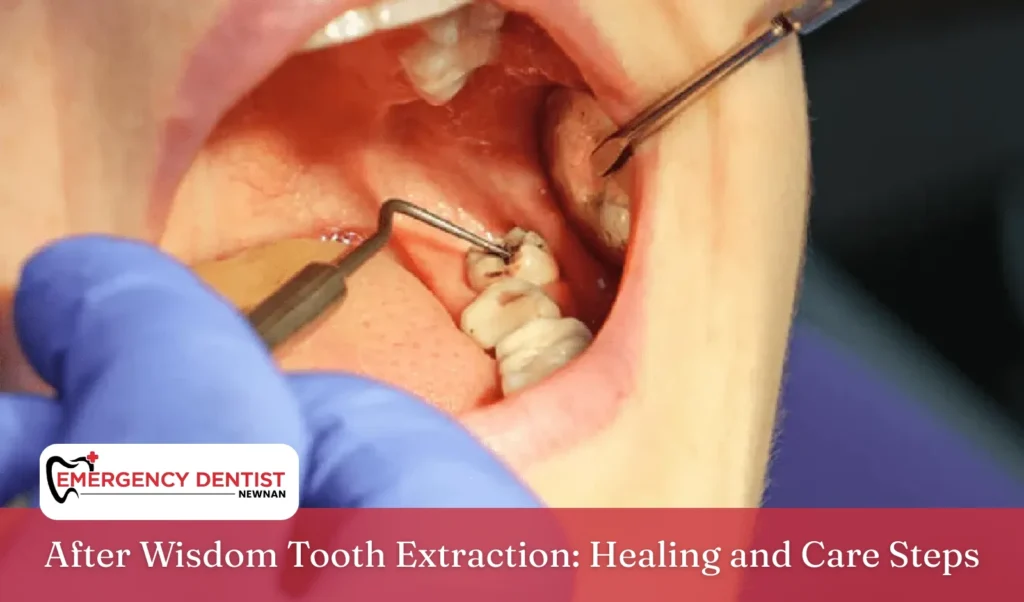
When wisdom teeth are removed, your body begins healing right away. Even though this is a common surgical procedure, it is still a type of tooth extraction. The area where the wisdom tooth was removed needs time and protection to recover properly.
A key part of removal of wisdom tooth aftercare is protecting the blood clot that forms inside the tooth socket. This clot covers the bone and nerves underneath. If it becomes dislodged too early, pain and swelling may increase and healing can slow down.
Understanding after wisdom tooth removal care helps you know what to expect and how to avoid problems during recovery.
What Happens Right After Surgery?

The hour after surgery is very important. Before you leave the office, gauze is placed over the extraction site. You will be asked to bite down gently but firmly. This pressure helps reduce bleeding and supports clot formation.
It is normal to notice mild bleeding, oozing or redness in your saliva during this stage. However, steady excess bleeding is not typical.
If you continue soaking through gauze repeatedly, call the office for instructions.
During the hour after surgery:
- Keep your head elevated
- Avoid rinsing your mouth
- Do not spit forcefully
- Do not drink through a straw
These steps protect the forming clot and reduce the risk of complications.
The First 24 Hours
The first day after wisdom teeth removed is all about rest and protection.
Pain and swelling usually begin during this time. This is part of normal healing. Your provider may prescribe pain medication or suggest over-the-counter options. Always follow directions carefully.
To manage pain and swelling:
- Use a cold compress on your cheek
- Rest and limit activity
- Stay hydrated
- Eat soft foods
Avoid smoking, alcohol, and vigorous rinsing. These can interfere with the clot inside the tooth socket.
After wisdom tooth removal, your goal is simple: protect the extraction site and allow natural healing to begin.
Why the First 48 Hours Matter Most

The first 48 hours are the most delicate stage of after care for wisdom tooth removal. Everything you do during this period can either support or disrupt healing.
Avoid:
- Crunchy or hard foods
- Spicy meals
- Using straws
- Aggressive mouth rinsing
After 24 hours, you may begin gently rinsing with warm salt water. Mix one teaspoon of salt into a cup of warm water. Let it move slowly around your mouth, then allow it to fall out naturally. Do not spit forcefully.
Warm salt water helps keep the area clean and is a key part of after care instructions for wisdom tooth removal.
Managing Pain and Swelling

Pain and swelling usually peak two to three days after the wisdom tooth removed procedure. This is normal after any surgical procedure.
To stay comfortable:
- Use cold compresses during the first 24 hours
- Switch to gentle warmth after swelling improves
- Take medication as directed
- Get enough rest
If pain becomes worse instead of better several days later, call the office. Sudden increases in discomfort may need evaluation.
Eating After Wisdom Tooth Removal
Your diet plays a big role in wisdom tooth removal care.
For the first few days, choose:
- Yogurt
- Mashed potatoes
- Eggs
- Soup
- Smoothies (without a straw)
Avoid nuts, chips, seeds, and hard snacks. These can irritate surgical areas.
Most patients begin adding soft solid foods during the week after surgery. Move slowly. If chewing increases pain and swelling, wait a little longer before returning to regular meals.
Oral Hygiene During Recovery
Many patients ask if they can brush their teeth the day after surgery. The answer is yes, but gently.
You may:
- Brush your teeth carefully the evening of surgery
- Avoid brushing directly over the extraction site
- Continue gentle brushing the day after surgery
Keeping the rest of your mouth clean supports healing and reduces bacteria. Avoid strong mouthwash unless recommended.
Good hygiene is part of proper after wisdom tooth removal care.
What Is Normal?
After wisdom teeth removed, certain symptoms are expected:
- Mild bleeding, oozing or redness
- Swelling
- Jaw stiffness
- Minor bruising
These symptoms should slowly improve each day.
However, call an Emergency Dentist in Newnan if you notice:
- Excess bleeding lasting several hours
- Fever
- Severe pain
- Pus or unusual discharge
- A bad odor
Prompt care protects the tooth socket and prevents complications.
Healing Timeline
Every person heals at a different pace, but most follow this pattern:
First 24 hours:
Clot forms. Bleeding slows. Rest is essential.
48 hours:
Swelling may peak. Continue warm salt water rinses.
3–5 days:
Pain and swelling gradually decrease.
Week after surgery:
Most patients return to normal routines.
If stitches were placed, your provider will explain when they dissolve or need removal.
Recovery With Impacted Wisdom Teeth
Impacted wisdom teeth often require a more involved surgical procedure. These teeth sit under gum tissue or bone, which can make surgical areas slightly larger.
Because of this, recovery may take a little longer. Swelling may be more noticeable. Careful post operative care is especially important in these cases.
Following after care instructions for wisdom tooth removal closely reduces the risk of complications and supports steady healing.
When to Seek Professional Help
Most recoveries go smoothly, and you should notice gradual improvement each day. Mild discomfort and swelling are expected at first, but these symptoms should slowly decrease as healing continues.
If your symptoms begin to increase instead of improve, do not ignore them. Ongoing excess bleeding, worsening pain and swelling, fever, a bad taste in your mouth, or unusual discharge from the extraction site should always be evaluated. These signs may indicate that the tooth socket needs professional attention.
Call an Emergency Dentist in Newnan if you feel unsure about your recovery or notice anything that concerns you. Early care can prevent small issues from becoming more serious and help protect your healing process.
Final Thoughts
Healing after wisdom tooth extraction requires patience and consistent habits. Protecting the clot, managing pain and swelling, and keeping the extraction site clean are your main priorities.
The first 48 hours are the most important. Gentle routines, soft foods, and proper hygiene allow your body to repair naturally.
Most patients feel much better within the week after surgery.
Have Questions About Your Healing?
If your wisdom tooth removal was recent and something does not feel right, do not wait.
An Emergency Dentist in Newnan can examine your extraction site, review your recovery plan, and provide clear guidance. Whether you are concerned about bleeding, discomfort, or swelling, professional support can give you peace of mind.
Schedule an evaluation today and make sure your healing stays on track.
Frequently Asked Questions
Is it normal to see blood the next day?
Yes, mild bleeding, oozing or redness during the first 24 hours is common. You may notice light staining in your saliva. However, heavy bleeding or bleeding that does not slow down should be checked by your provider.
Can I brush my teeth the day after surgery?
Yes, but brush gently and avoid the extraction site for several days. Keeping the rest of your mouth clean helps reduce bacteria and supports proper healing.
When can I eat solid food again?
Start with soft foods first. You can slowly add soft solid foods once chewing feels comfortable and pain improves. Avoid hard or crunchy foods until the area feels stable.
Why does my jaw feel tight?
Jaw stiffness is common after a surgical procedure, especially if your mouth was open for an extended time. This usually improves within a few days as swelling decreases.
How do I know if I have excess bleeding?
If gauze becomes soaked quickly for several hours or bleeding does not slow with gentle pressure, call the office for guidance.