


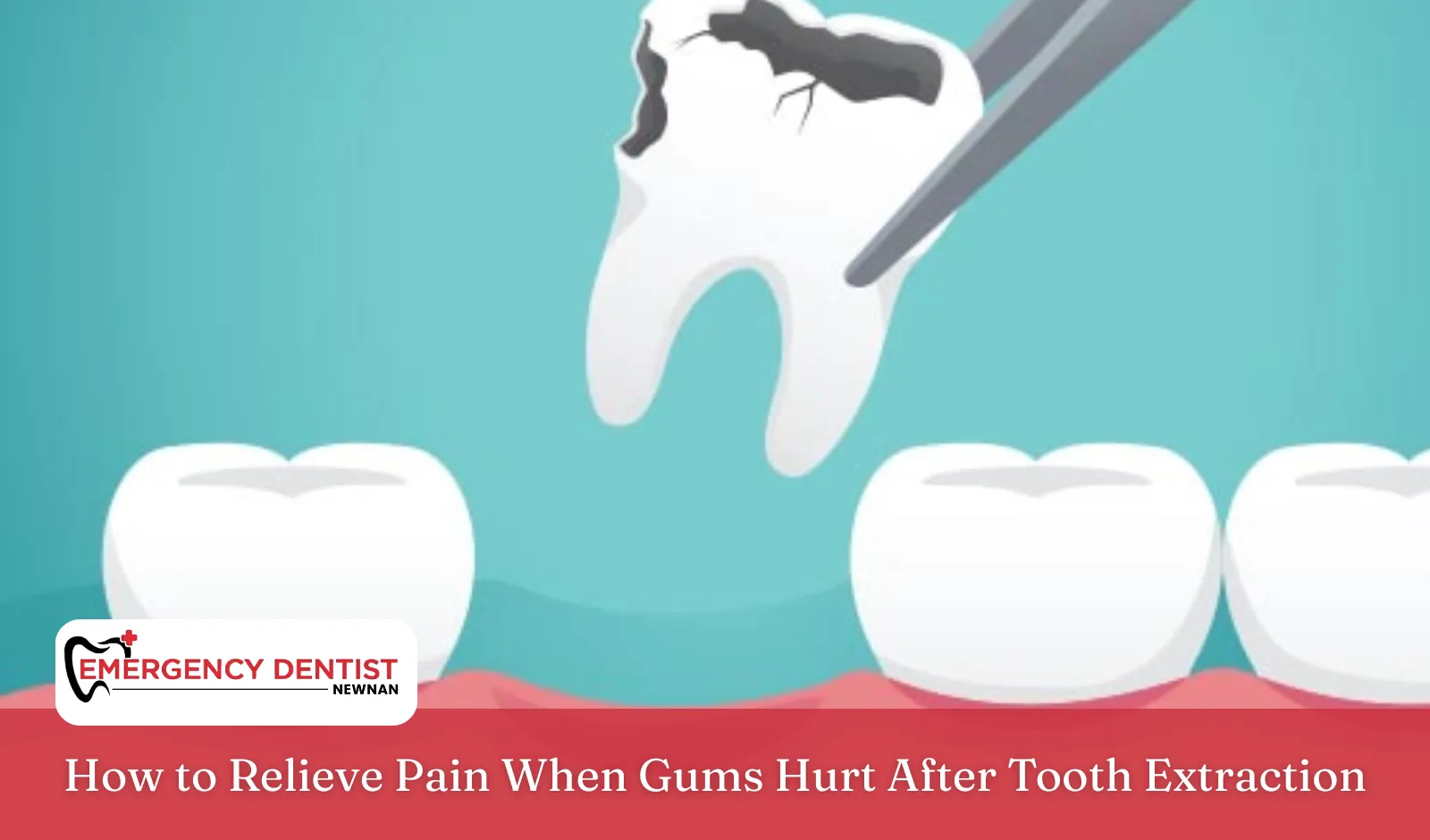
Quick Answer
Is it normal for your gums to be sore after a tooth is pulled?
Yes. Mild soreness and swelling are normal and usually ease within a week. Call a dentist if pain gets worse after day 2 or 3.
Key Takeaways
- Mild soreness and swelling are normal and usually peak around day 2 or 3.
- Use a cold pack the first day, then gentle salt-water rinses.
- Skip straws and smoking to protect the blood clot.
- Pain that worsens after day 3 or lasts past a week needs a dentist.
- Face or neck swelling, fever with swelling, trouble swallowing or breathing, or bleeding that won’t stop means the ER or 911.
When a tooth is removed, many people wonder why their gums hurt after tooth extraction. Mild soreness is part of healing, but pain that lingers or grows worse could signal a complication.
How the Healing Process Works
After extraction, a blood clot forms in the socket, covering sensitive bone and nerves. This clot is vital for healing.
- First 24 hours: Light bleeding or oozing, gum tenderness, and some swelling are normal. Be careful not to disturb the clot.
- Around days 2 to 3: Soreness and swollen gums usually peak, then begin to ease.
- Several days after surgery: Discomfort should fade, though wisdom tooth sites may take longer.
If your gums hurt after tooth extraction and the pain gets stronger after day 2 or 3, or lasts beyond a week, call a dentist.
Normal vs. Concerning Gum Pain

Tenderness in the extraction area is common, including when chewing or with hot and cold foods.
But if your gums hurt more or don’t improve after the first few days, or if you notice ongoing foul tastes in your mouth or increasing swelling, the healing process may not be going as expected.
Related: How Long Does It Hurt After Tooth Extraction In Recovery
Possible Complications to Watch For
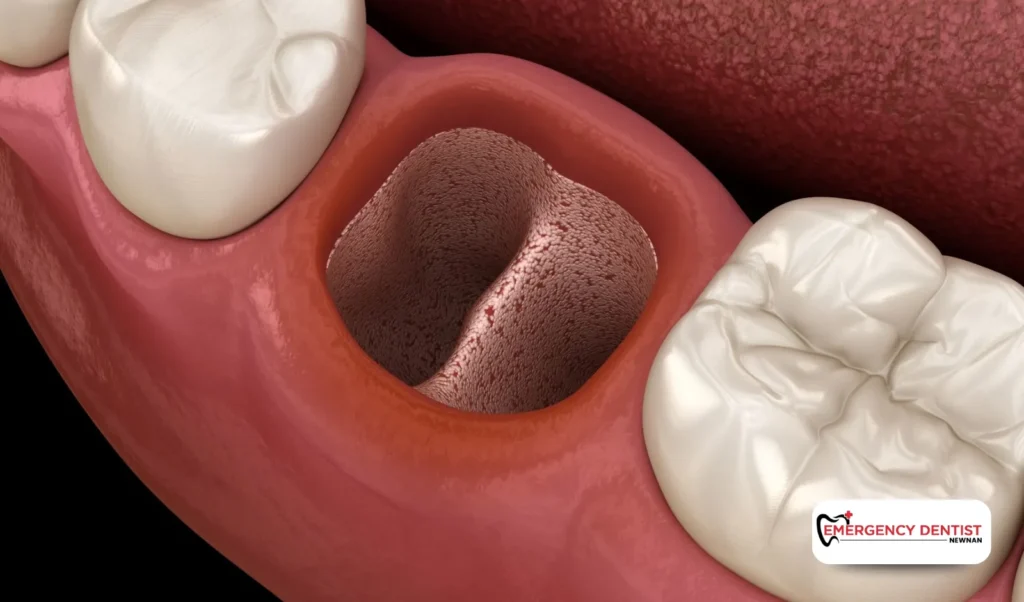
Most patients recover without issues, but some complications can disrupt healing:
- Dry socket: If the blood clot dissolves or is dislodged too early, the exposed socket causes severe pain, often radiating to the ear or jaw.
- Signs of infection: Persistent pain and swelling, pus, fever, or redness in the extraction site may indicate infection.
- Bad breath or foul tastes: These may point to bacteria or trapped food around the wound.
If these problems appear, contact our team promptly. Swelling that spreads to your face or neck, or trouble swallowing or breathing, needs the ER or 911.
Related: Signs of Dry Socket After Tooth Extraction and Its Causes
Caring for Gums After Tooth Extraction
To manage soreness and protect your mouth during healing, we recommend:
- Use an ice pack: Hold it to your cheek for 15 minutes at a time during the first 24 hours to ease swelling.
- Rinse with salt water: Starting 24 hours after surgery, gently rinse with warm salt water after meals. Don’t swish hard; let it fall from your mouth.
- Brush your teeth carefully: Keep brushing, but avoid the extraction area for the first few days.
- Maintain oral hygiene: Keeping your mouth clean helps control bacteria and supports gum healing.
- Ease pain safely: Use OTC ibuprofen or acetaminophen as directed on the label, if it is safe for you.
These steps help protect your gums as you heal.
Tips for a Smooth Recovery
To support healing and reduce soreness:
- Stick with soft foods during the first few days after surgery.
- Avoid straws and smoking, which can disturb the blood clot and lead to dry socket.
- Rest and allow your body to focus on healing.
Related: Smoking After Tooth Extraction: Healing Risks & Care Guide
When to See a Dentist
Call a dentist if pain gets worse after day 2 or 3, lasts beyond a week, or you notice pus, a bad taste, or growing swelling. An Emergency Dentist in Newnan can check the extraction site and treat problems early.
Go to the ER or call 911 for face or neck swelling, fever with swelling or worsening pain, trouble swallowing or breathing, bleeding that won’t stop with firm pressure, or a jaw injury.
Final Thoughts
Mild gum soreness is normal for the first few days after an extraction. Cold packs, gentle salt-water rinses and careful brushing can ease it, but pain that worsens or lingers should be checked.
Are Your Gums Still Sore After an Extraction in Newnan?
Gum pain after an extraction can be worrying. An Emergency Dentist in Newnan can check for problems and guide you. Contact the dental team to arrange a visit.
Frequently Asked Questions
Why do gums hurt after tooth extraction?
Gums hurt after tooth extraction because the tissue around the empty socket is healing. Tenderness and swollen gums usually improve within a few days.
How long should gum pain last after a tooth is removed?
Most soreness peaks around day 2 or 3 and eases within about a week; wisdom tooth sites may take longer. Call your dentist if pain worsens or lasts beyond a week.
What are signs of infection after extraction?
Watch for severe pain and swelling, pus, fever, or a foul taste in your mouth. These signs need prompt dental care. Fever with swelling, or trouble swallowing or breathing, needs the ER or 911.
Can I use a straw after a tooth extraction?
No, avoid straws for the first few days, or as long as your dentist advises. Suction can pull the blood clot loose and lead to dry socket.
Is bleeding normal after a tooth extraction?
Light oozing on the first day is normal. If bleeding stays heavy after biting firmly on gauze, call your dentist, and go to the ER if it won’t stop.