


Quick Answer
Is it normal for the hole to stay open for weeks?
Yes. The gum usually starts closing in the first week and covers most sockets in about 3 to 4 weeks. Surgical sites can take 6 weeks or more, and the bone keeps filling in for months.
Key Takeaways
- A blood clot forms soon after extraction and protects the socket.
- After a simple extraction, the gum usually closes in about 3 to 4 weeks.
- Surgical and wisdom tooth sites can take 6 weeks or more.
- The bone underneath keeps healing for several months.
- Soft foods, gentle salt-water rinses after the first day and no straws help protect the clot.
- Face or neck swelling, fever with pain, or trouble breathing or swallowing needs the ER or 911.
Many patients ask, “How long for a tooth extraction hole to close?” Knowing what to expect after a simple or surgical extraction can ease worry and guide your aftercare.
The total recovery time depends on the type of extraction, overall health, and how well the extraction site is cared for. If healing seems slow or painful, our team can help.
Why Does an Extraction Hole Form?
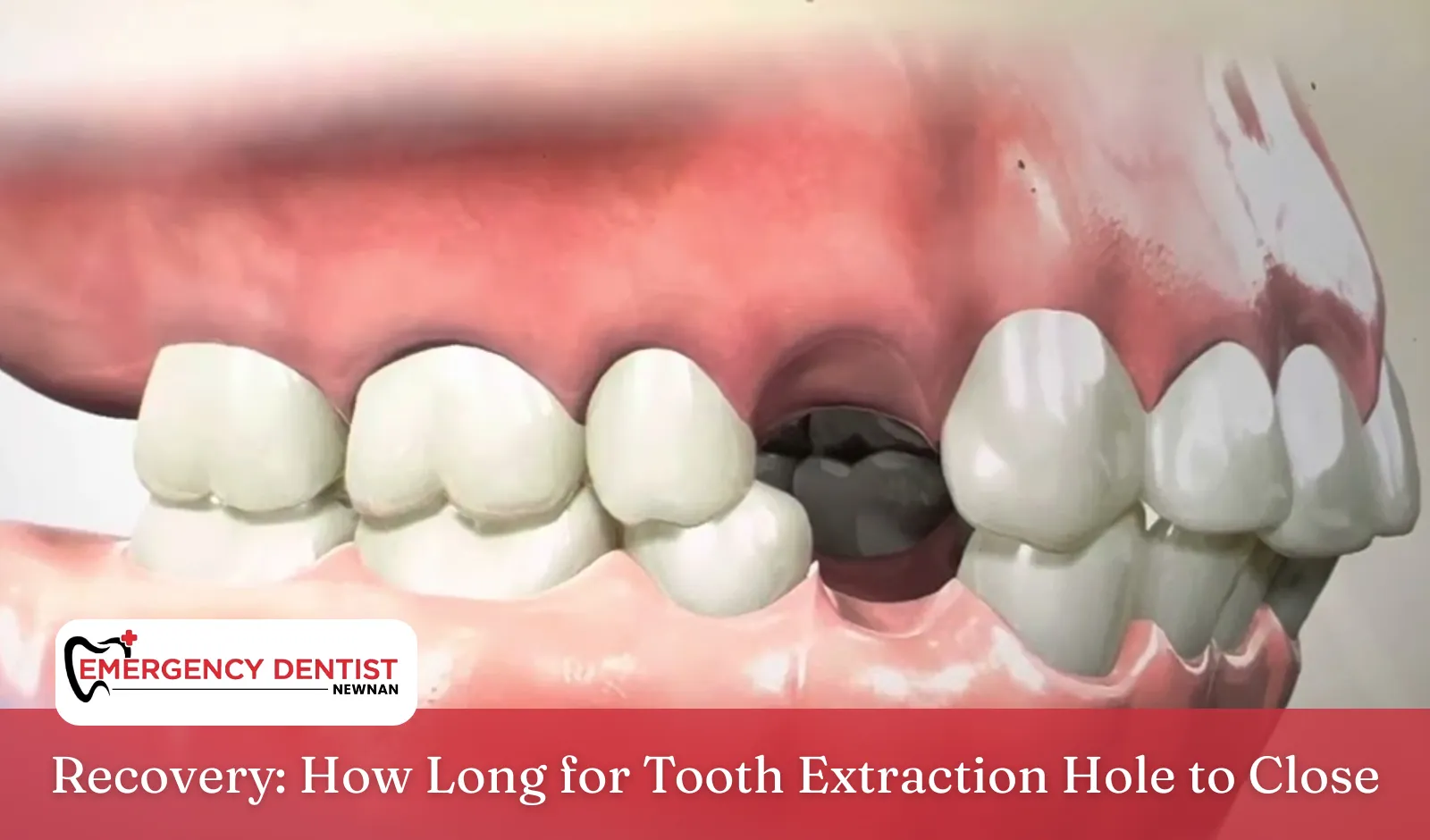
When a dentist performs a tooth removal, the procedure leaves behind an empty tooth socket in the jawbone. Over time, new tissue forms and the bone beneath strengthens, helping the socket close naturally.
Related: Hole After Tooth Extraction: Healing Guide for Patients
The Importance of the Blood Clot
Soon after a tooth is removed, a blood clot forms inside the socket. This clot works like a natural bandage, covering exposed bone and nerve endings.
If the clot becomes dislodged or dissolves too early, it can lead to dry socket, a painful condition that slows healing and needs a dentist’s care. Protecting this clot is one of the most important parts of early healing.
Related: How to Avoid Dry Socket After Tooth Extraction Effectively
Types of Extraction and Healing Time

The types of extraction affect how long it takes for the hole to close:
- Simple extraction: The tooth is gently loosened and removed without surgery. Recovery is faster, and the gum often starts closing over the socket within the first week.
- Surgical extraction: Needed for broken teeth or impacted teeth (stuck under the gum or bone), such as many wisdom teeth. Because gum or bone may need to be cut, the healing time is longer. It can take 6 weeks or more for the gum to fully close the socket.
Wisdom teeth extractions often take the longest to heal.
Stages of the Healing Process
Healing happens in stages:
- First 24 hours: A blood clot starts to form, mild swelling begins, and light bleeding is normal.
- Days 2 to 7: Soft tissue repair begins, and the gum line gradually starts closing the hole.
- Weeks 2 to 4: Most gum tissue heals, although deeper areas of the tooth socket and bone remain in recovery.
- 1 to 3 months: The bone becomes stronger, and the hole continues to shrink.
- Complete healing: Full bone healing can take several months, depending on the procedure.
Related: Tooth Extraction Healing Stages and Recovery Made Simple
How Long for Hole to Close After Tooth Extraction
For many patients, the visible hole begins shrinking within the first week. After a simple extraction, the gum usually closes in about 3 to 4 weeks, while the bone keeps healing for months.
After a surgical or wisdom tooth extraction, it can take 6 weeks or more for the gum to fully seal the socket. Even when the gums look healed, the bone underneath can take several months to fully heal. Recovery times vary, but good aftercare supports healing.
Related: Healing Guide: Hole in Gums After Wisdom Tooth Extraction
Protecting the Extraction Site During Recovery

Taking care of the extraction site is essential for smooth healing:
- Avoid food particles: Eat soft foods like yogurt, mashed potatoes, or smoothies that won’t get trapped in the socket.
- Choose room temperature meals: Very hot foods and drinks may disturb the clot in the first few days.
- Maintain gentle oral hygiene: Starting 24 hours after surgery, or as your dentist advises, rinse gently with warm salt water, let it fall from your mouth, and brush carefully near the site.
- Rest and recover: Avoid heavy activity, which can increase swelling and extend recovery time.
- Skip straws and smoking: Both can loosen the clot in the first few days.
Related: Foods to Eat After Tooth Extraction for Faster Recovery
When to See a Dentist
As healing progresses, you should notice steady improvement: less swelling, reduced pain, and the hole gradually closing. However, some warning signs may point to complications:
- Severe or worsening pain several days after extraction
- Persistent unpleasant taste or odor in the mouth
- A socket that looks empty, with bone showing
- Swelling that does not improve or gets worse, or pus coming from the socket
These may be signs of dry socket or infection. Go to the ER or call 911 for face or neck swelling, fever with pain, trouble swallowing or breathing, or bleeding that won’t stop. For the other signs, contact our Newnan emergency dental team as soon as possible.
Final Thoughts
Healing after a tooth extraction takes time and patience. A simple extraction may allow the site to close in just a few weeks, while a surgical extraction often takes longer.
Protecting the blood clot, eating soft, room temperature foods, and gentle oral hygiene help lower the risk of dry socket. Every patient heals at a different pace, so follow your dentist’s aftercare advice.
Worried About Your Extraction Site Healing in Newnan?
Slow healing, new pain or a bad taste near the socket can leave you unsure what is normal. An Emergency Dentist in Newnan can examine the area, check for complications, and give guidance based on your symptoms. Contact the dental team to arrange a visit.
Frequently Asked Questions
Is it normal to have a hole in my gum after wisdom tooth removal?
Yes. The hole is the healing socket, and it slowly fills with new gum tissue and bone.
Can I use a straw or smoke while the socket heals?
It is best to avoid both until your dentist says it is safe. Suction and smoking can loosen the blood clot and raise the risk of dry socket.
What should I do if food gets stuck in the socket?
After the first 24 hours, rinse gently with warm salt water and do not poke the area. If food stays stuck or pain increases, call your dentist.